
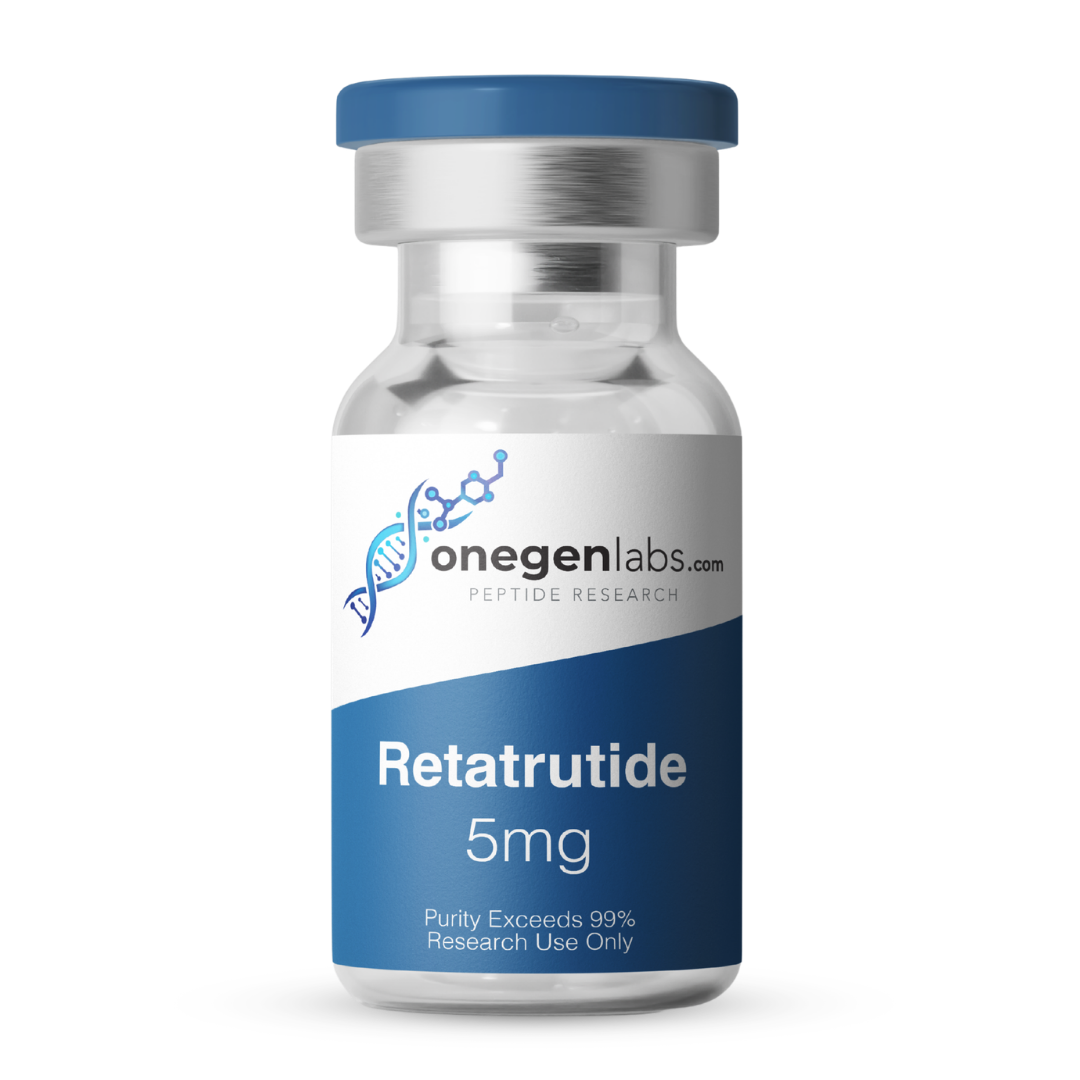
Retatrutide
Product Details
Retatrutide — Research Peptide
Retatrutide is a multi-receptor peptide agonist commonly studied in laboratory settings for its interaction with glucagon, glucose-dependent insulinotropic polypeptide (GIP), and glucagon-like peptide-1 (GLP-1) receptor signaling pathways. This investigational peptide has been researched for its role in metabolic signaling, endocrine communication mechanisms, and peptide-mediated regulatory pathways.
Scientific literature has explored Retatrutide in studies involving metabolic homeostasis, glucose signaling pathways, energy regulation, and receptor-mediated cellular communication. Additional research has examined how multi-agonist peptide compounds interact with endocrine signaling systems associated with metabolic pathway regulation and biochemical signaling processes.
Published studies have investigated Retatrutide in laboratory models involving glucagon receptor activity, incretin pathway signaling, peptide-receptor interactions, and metabolic communication systems. Research has also explored its role in molecular signaling pathways related to energy balance and endocrine function.
This compound is supplied for qualified laboratory research and analytical purposes only.
Product Details
Product Name: Retatrutide
Form: Lyophilized peptide powder
Grade: Research use only
Application: Laboratory research and analytical testing only
Storage: Store in a cool, dry place under proper laboratory storage conditions.
Research Areas
This compound may be used in research related to:
- GLP-1, GIP, and glucagon receptor pathway studies
- Metabolic and endocrine signaling research
- Peptide-receptor interaction investigation
- Energy regulation and metabolic homeostasis analysis
- Incretin signaling pathway studies
- Cellular communication and biochemical signaling research
- Molecular and endocrine pathway investigation
Research References
- Jastreboff AM, Kaplan LM, Frías JP, et al. “Triple–Hormone-Receptor Agonist Retatrutide for Obesity.” New England Journal of Medicine.
- Müller TD, Finan B, Bloom SR, et al. “Glucagon-like peptide 1 (GLP-1).” Molecular Metabolism.
- Campbell JE, Drucker DJ. “Pharmacology, physiology, and mechanisms of incretin hormone action.” Cell Metabolism.
Lorem ipsum dolor ist amte, consectetuer adipiscing eilt. Aenean commodo ligula egget dolor. Aenean massa. Cum sociis natoque penatibus et magnis dis parturient montes, nascetur ridiculus mus. Donec quak felis, ultricies nec, pellentesque eu, pretium quid, sem.